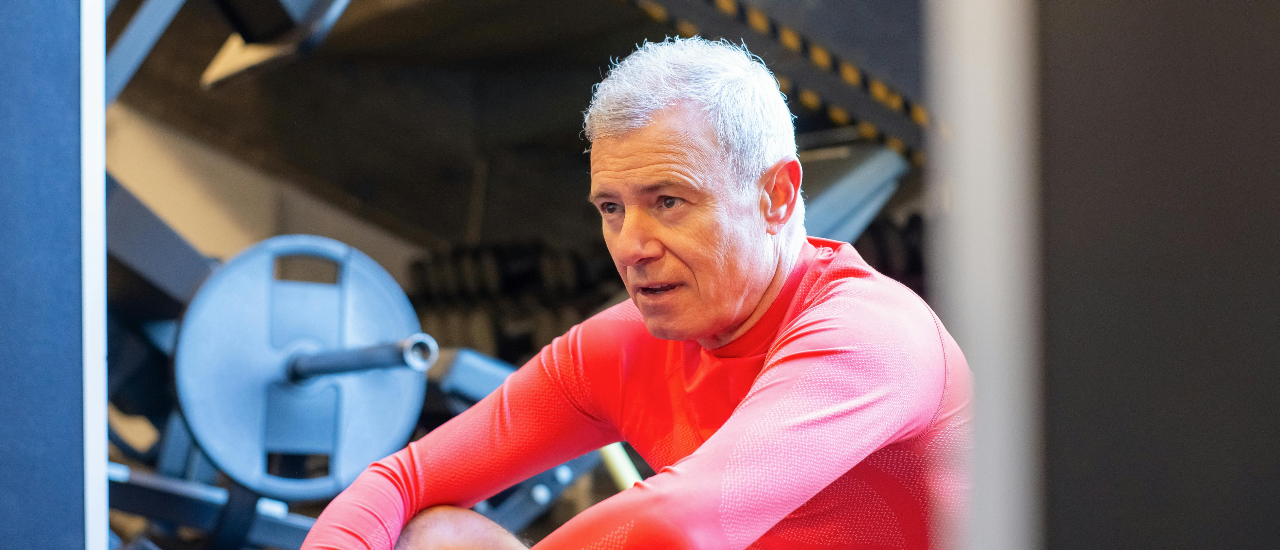
Strength & Fitness After 50
Why It’s Not Too Late for Strength and Fitness After 50—and Why It Might Be the Most Important Thing You Do
There’s a pattern I’ve repeated more times than I care to admit.
I start going to the gym.
I feel better. I look better. I move better.
Then life happens.
Work gets busy. A move. Travel. Disruptions.
Weeks turn into months.
And before I know it, something feels… off.
Since college, I’ve gone through multiple cycles of training, stopping, and starting again. Every single time I came back, the beginning was harder. There was more stiffness. More soreness. More resistance—both physical and mental.
But something else was always there.
The muscle memory.
The confidence.
That feeling of being back in my body again.
Most recently, my wife and I moved from Florida to North Carolina. Anyone who’s moved knows how disruptive that can be. New routines, new surroundings, new everything. The gym slipped away again.
And at 68, you lose definition quickly.
One morning I looked in the mirror and thought, “What the hell is that?”
I swear I saw the beginnings of man boobs.
That moment shocked me—not because of vanity, but because it was a reminder:
Strength and Fitness After 50 fades faster than most men realize when you stop paying attention.
So I found a local gym.
And I started again.
Three days a week of weight training.
Three days a week of cardio or light HIIT (High-Intensity Interval Training).
Nothing extreme. Just consistent.
A few months later, I’m coming back.
And every single time, it’s worth it.
Two Paths. Same Destination.
When it comes to strength and fitness after 50, I see men fall into two broad groups.
If You’ve Never Lifted Before
If that’s you, hear this clearly:
It is not too late. Not even close.
You don’t need to become a gym rat.
You don’t need to chase numbers or compete with anyone.
What you will experience—if you stay consistent—is something many men have never felt before:
- Increased confidence
- Better posture and balance
- Stronger joints
- Better sleep
- A noticeable psychological lift
Strength training doesn’t just change your body.
It changes how you show up in your life.
If You Used to Lift (But Life Got in the Way)
This one’s personal.
If you lifted when you were younger and it’s been years—or decades—you may feel discouraged walking back into a gym. You might feel stiff, weaker than you remember, and out of place.
Here’s the good news:
The muscle memory is still there.
It may take four to six weeks.
Recovery may take longer than it used to.
But one day you’ll notice your clothes fitting better, your posture improving, and that quiet confidence returning.
Not overnight.
But steadily.
My Philosophy on Training for Strength and Fitness After 50
here is no single “right” way to train at this age.
Your history, physiology, and mindset all matter.
That said, I strongly believe this:
Consistency Beats Intensity—Especially at the Start
If you haven’t trained in years, your goal is not to crush workouts.
Your goal is to wake your muscles up again.
Your workouts should make you feel better—not punished.
I like structure and balance. My typical week looks like this:
- Back & Biceps
- Cardio / light HIIT
- Chest & Triceps
- Cardio / light HIIT
- Abs & Shoulders
- Cardio / light HIIT
- Leg Day
My HIIT (High Intensity Interval Training) today is not what it used to be—and that’s fine.
I’ll do 30 minutes on the treadmill or eliptical of:
- 45 seconds to 1 minute at a faster pace
- 60–75 seconds at a slower pace
That’s it. In fact, you DO NOT need to do HIIT training right away. To start just get yourself up to a 30-minute brisk walk. Build up to it.
Balance matters more than bravado now.
Note about cardio at 50 and older - I was a bit reluctant to push on the cardio not knowing how much my heart could take at my age (68). I have a FitBit. I recommend that you get one or something similar that will monitor your heart rate among other conveniences. Plug your resting heart rate and age into ChatGPT. Tell it that you are looking for a range for your heart rate for cardio training.
Understanding Your Target Heart Rate
I did this (my resting heart rate is 58 to 60 bpm). ChatGPT came back and told me that I was looking for a fat burn cardio range of between 98 and 118 beats/minute. I stay within this range when doing any type of cardio and especially HIIT (High Intensity Interval Training).
Diet Matters More Than You Think
Training alone isn’t enough.
I keep it simple:
- High protein
- Very little snacking
- I work out fasted
- Post-workout: whey protein shake and two hard-boiled eggs
No extremes. Just discipline.
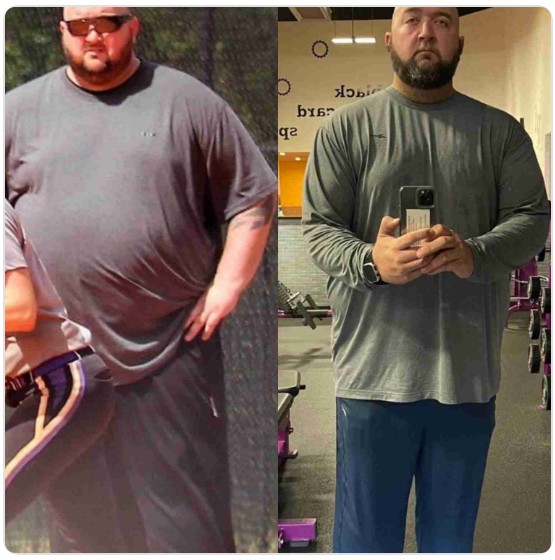
real results from real men
read beau's story
Warm-Up and Stretching: Non-Negotiable After 50
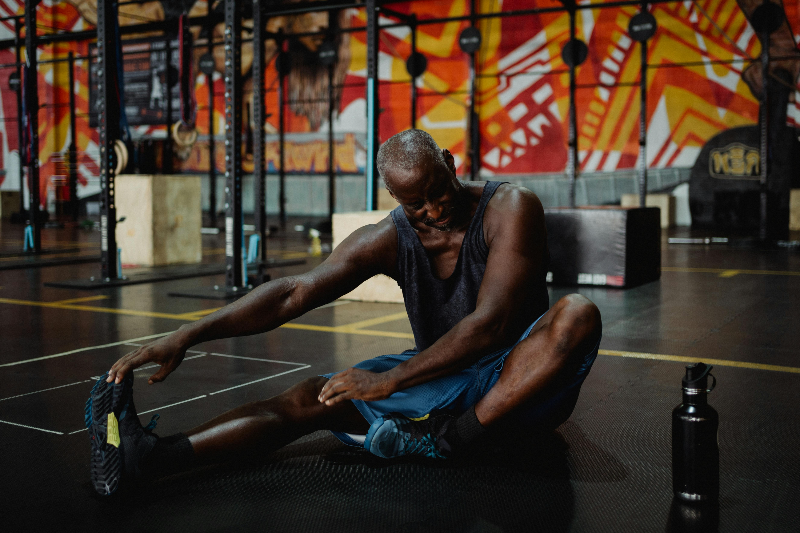
If you’re over 50, this part is not optional.
I don’t care how short your workout is or how light the weights are—warming up and stretching matter more now than ever.
The 2-Minute Warm-Up
You don’t need a complicated routine.
Two minutes is enough to tell your body, “We’re about to work.”
That can be:
- A light treadmill walk
- Easy pedaling on a bike
- Gentle movement on the elliptical
The goal isn’t fatigue.
It’s blood flow and joint readiness.
Those two minutes can mean the difference between a smooth session and one that feels stiff and painful.
The 10-Minute Stretching Session
This is the part most men skip—and the part that pays the biggest dividends.
At the end of every workout, I spend about 10 minutes stretching.
Not aggressively.
Not painfully.
Just intentionally.
Stretching:
- Helps maintain flexibility as we age
- Reduces post-workout soreness
- Improves recovery between sessions
- Protects joints over the long term
If you’re short on time, shorten the workout—not the warm-up or stretching.
The Only Hard Suggestion I’ll Make
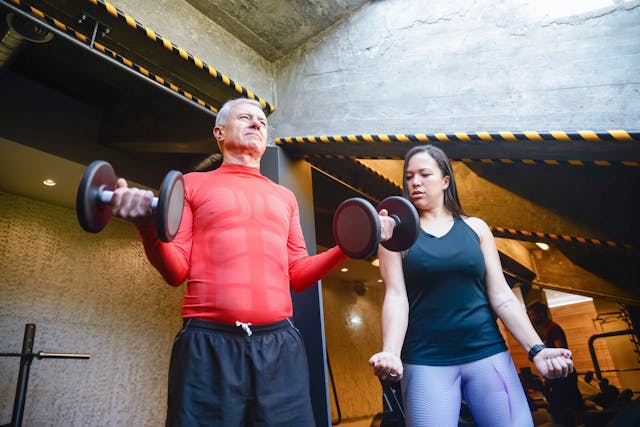
If it’s been more than 10 years since you trained consistently, consider working with a personal trainer for a few sessions.
Not forever.
Not to be pushed to exhaustion.
Just to:
- Check your form
- Build a routine that fits you
- Make sure you’re training safely
We know more about the body now than we did decades ago. Use that knowledge.
Why I Don’t Believe in a “Perfect Exercise List”
I change my routines every month or so.
Not because I’m chasing novelty—but because:
- I don’t want to get bored
- I don’t want my body to adapt too comfortably
- I want to challenge different movement patterns
At this stage of life, variety supports longevity.
Focus on:
- Pushing
- Pulling
- Legs
- Core
- Balance
Show up consistently and let the details evolve.
Strength, Recovery, and Aging Well
Here’s the reality most men overlook:
You don’t build strength during the workout.
You build it during recovery.
As we age, recovery becomes just as important as training itself—especially for joints, connective tissue, and overall resilience.
That’s why I’m intentional about what I put in my body.
What I Personally Use to Support Recovery
- Surge & Build to support muscle repair and rebuilding
- Electrolytes to stay properly hydrated—especially with cardio and HIIT
- Luxe Liquid Collagen to support joints, tendons, and connective tissue
- Xcelerate
- Coffee version for coffee drinkers
- Watermelon Berry or Tropical Sunrise for non-coffee drinkers
You can start with the 4 Day Sampler or go all in.
Both approaches work—supporting your body at this age is incredibly important so you can keep showing up consistently. Don't try to attempt this without giving your body the nutrition it needs for a healthy recovery.
A Simple Starting Framework
If you’re unsure where to begin, keep it simple.
Weeks 1–2
- 3 strength sessions per week
- 20–30 minutes per session
- Light weights, perfect form
- 2–3 easy cardio days
Weeks 3–6
- Gradually increase resistance
- Add one additional set
- Introduce light HIIT intervals
- Prioritize recovery and protein
No heroics.
No punishment.
Just momentum.
Final Thought
Strength after 50 isn’t about ego.
It’s about independence.
If you stop lifting, life does get heavier.
And muscle truly is the currency of aging well.
You’re not broken.
You’re not too late.
You’re just dormant.
And waking that strength back up—at any age—is always worth it.
Explore the Complete Men’s Health After 50 Guide
A practical, no-nonsense guide to energy, strength, recovery, and long-term vitality.
Go to Men’s Health After 50Continue Exploring This Topic
If this article sparked questions or gave you a new way to think about your health, here are a few related posts that go deeper into the same topic.
Not Enough Energy to Exercise?
Best Exercises for Men Over 50
Core Exercises for Men Over 50

More Energy = More Moments
Feel sharper, sleep better—and share the vitality with someone you love. Our 4-Day Sampler is designed to help men 50+ boost energy, sharpen focus, sleep better, and feel more alive—without the crash.
Start Your 4 Day TransformationGet Practical Health Insights for Men 50+
Join my email list and I’ll send you simple, real-world strategies to help you improve energy, strength, and vitality — without hype or extremes.
Interested in the Beneve Business?
If you’re exploring ways to build income around health and wellness — and want to learn how Beneve works beyond the products
— you can read more here.
Beneve makes absolutely no medical claims with regards to our products, or individual ingredients.
You should consult a physician before starting any workout program.
Disclaimer: MyVitalityReboot.com does earn a commission from Beneve purchases made through links on this site — at no extra cost to you.
This enables us to continue providing high-quality content on health and vitality for men over 50.

Written by Dale Guiducci
Dale is the creator of MyVitalityReboot, helping men over 50 regain energy, strength, and vitality through real-world experience and practical fitness strategies.